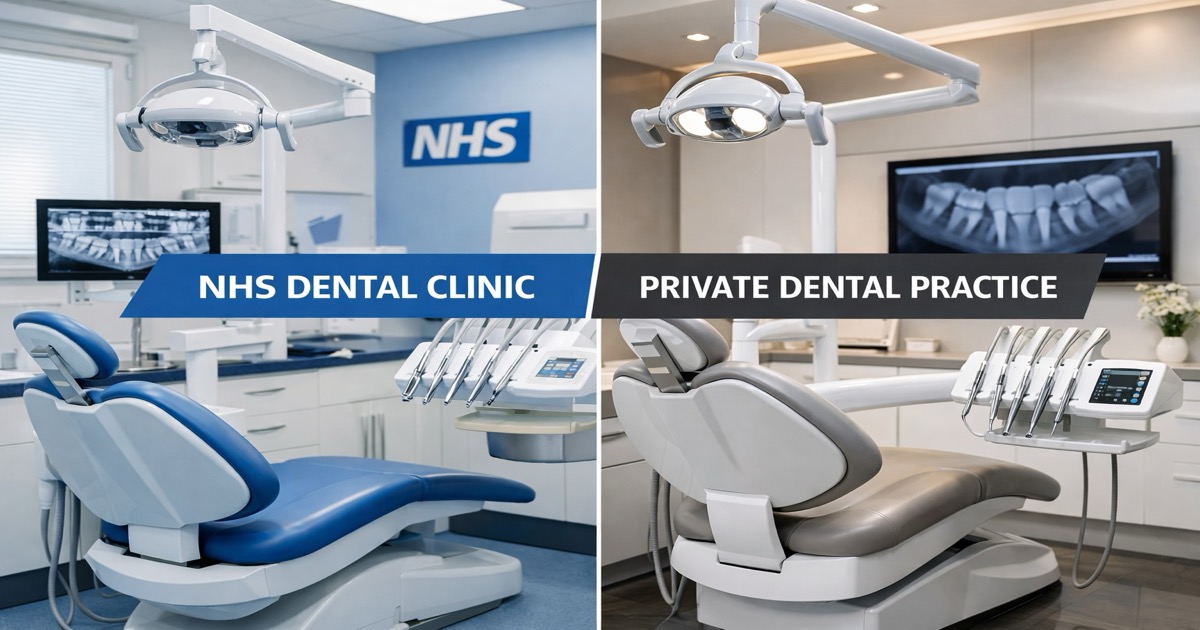
Choosing between NHS and private dental work is one of the most significant career decisions you will face as a dental professional. It is not simply a matter of earning potential or job security—though both are important considerations. This choice shapes your daily working life, your relationships with patients, your clinical freedom, and ultimately, your long-term career satisfaction.
Whether you are a newly qualified dentist considering your first associate position, or an experienced practitioner contemplating a change in direction, understanding the nuances of both pathways is essential. There is no universally correct answer; the right choice depends entirely on your personal circumstances, professional goals, and what you value most in your working life.
Understanding NHS Dental Work
NHS dentistry operates under a contract system that has been in place since 2006, centred around Units of Dental Activity, commonly known as UDAs. When you work as an NHS dentist, your practice holds a contract with the NHS that specifies an annual UDA target alongside a fixed budget to deliver those units.
The UDA System Explained
Treatment under the NHS is organised into bands, with each band worth a different number of UDAs:
- Band 1 covers examinations, diagnosis, X-rays, scale and polish if clinically needed, and preventative care—worth 1 UDA
- Band 2 includes everything in Band 1 plus fillings, root canal work, or extractions—worth 3 UDAs
- Band 3 covers complex treatments including crowns, dentures, and bridges—worth 12 UDAs
The value of a UDA varies considerably depending on location and individual contract terms, which means NHS dentists in different areas can earn quite different amounts for identical work. Meeting your UDA target ensures you receive your full contract value, but falling short can result in clawback—financial penalties that reduce your earnings.
The Realities of NHS Practice
Working within the NHS means operating in a structured environment with standardised procedures. Appointment times are typically shorter—often limited to ten to fifteen minutes for routine check-ups—due to high patient demand and tight scheduling requirements. This pace can feel challenging, particularly when treating patients with complex needs or those who require more time to feel comfortable.
One aspect that frustrates many NHS dentists is the limitation on treatment options. NHS guidelines restrict which materials and techniques can be used, and there is often little scope to offer the latest dental technologies or premium materials without patient top-up payments.
However, the NHS pathway also offers meaningful rewards. There is genuine satisfaction in providing essential dental care to those who might otherwise be unable to afford it. You become part of a public health system that serves communities regardless of their financial circumstances.
Understanding Private Dental Practice
Private dentistry operates entirely outside the NHS framework, giving practices the freedom to set their own fees, choose their equipment, and determine their treatment approaches. This autonomy is one of the primary attractions for many dental professionals considering the private route.
Clinical Freedom and Treatment Options
In private practice, you are not constrained by NHS budgets or guidelines regarding which treatments you can offer. You can invest in the latest dental technology—3D scanners, digital impression systems, advanced imaging equipment—and use premium materials as standard. If you believe a particular approach will deliver better outcomes for your patients, you have the freedom to implement it.
This clinical independence extends to how you structure your appointments. Private consultations are typically longer and more relaxed, allowing time for thorough assessments, detailed explanations of treatment options, and genuine relationship-building with patients.
The Business Side of Private Practice
With greater freedom comes greater responsibility. Working in private practice—whether as an associate or a practice owner—means navigating the commercial realities of healthcare. You need to attract and retain patients, justify your fees, and deliver an experience that meets elevated expectations.
For associates in private practice, the typical revenue split tends to be around forty-five to fifty-five per cent of gross earnings, though this varies depending on the practice's overheads and the specific terms negotiated. Building a loyal patient base takes time, but those who succeed often find the rewards substantial.
Work-Life Balance Comparison
Your choice between NHS and private work has significant implications for your daily routine and overall lifestyle.
NHS Working Patterns
NHS practices generally operate during standard hours, with evening and weekend work being relatively uncommon. The structured nature of NHS contracts can provide a more predictable schedule, which many practitioners appreciate, particularly those with family commitments or other responsibilities outside work.
That said, the pressure to meet UDA targets can create stress that extends beyond clinical hours. Falling behind on targets creates anxiety about clawback, and the pace of appointments can leave you feeling exhausted by the end of each day.
Private Working Patterns
Private practices often offer more flexibility in how you structure your working week. Many private dentists choose to work evenings or weekends to accommodate patient preferences, while others prefer condensed schedules that give them more consecutive days off.
As a private practitioner, you have more control over your appointment book. You can choose to see fewer patients with longer appointment times, or you can maximise your earning potential by seeing more patients if you prefer. This autonomy allows you to design a working pattern that suits your lifestyle preferences.
Earning Potential and Financial Considerations
Money is not everything, but it is certainly a significant factor when planning your career. The financial differences between NHS and private work are substantial, though the picture is more nuanced than simple salary comparisons might suggest.
NHS Earnings
NHS dental earnings depend largely on your UDA rate and your ability to meet targets efficiently. The predictability of NHS contracts can provide financial stability—you know what your target is and roughly what you will earn if you meet it. For many practitioners, particularly those starting their careers, this certainty has genuine value.
However, the UDA system does create a ceiling on your earning potential. You cannot simply see more patients or offer more treatments to increase your income; you are bound by your contracted activity levels.
Private Earnings
Private dentistry offers significantly higher earning potential for those who can build successful practices or associate positions. Top private practitioners can earn substantially more than their NHS counterparts, particularly those who develop specialisms in cosmetic or restorative dentistry.
The trade-off is that private earnings are less predictable, especially when you are establishing yourself. Building a private patient base takes time, and your income fluctuates with patient demand. There are also no guaranteed contract values to fall back on during quieter periods.
Patient Relationships and Clinical Freedom
How you interact with patients differs markedly between the two settings, and for many dentists, this is the deciding factor in their career choice.
NHS Patient Relationships
NHS dentistry involves treating high volumes of patients, often with limited time for each consultation. While you can certainly build relationships with regular patients over time, the pace of NHS appointments means conversations are necessarily brief and focused on immediate clinical needs.
There is, however, something rewarding about serving a broad cross-section of your community. NHS patients include families, elderly individuals, and those from all socioeconomic backgrounds. Many dentists find purpose in knowing they are providing essential care to people who truly need it.
Private Patient Relationships
Private practice allows for deeper patient relationships built over longer appointments and more personalised care. You have time to discuss lifestyle factors, preventative strategies, and treatment options in detail. Patients who pay privately often have higher expectations, but meeting those expectations can be deeply satisfying.
The clinical freedom to offer the best possible treatment—using premium materials, latest techniques, and unhurried appointments—means you can practise dentistry closer to what you might consider ideal. Many private practitioners report greater job satisfaction simply because they feel able to do their best work.
Job Security and Stability
The question of security looks different depending on which path you choose, and both options have their advantages and vulnerabilities.
NHS Security
NHS contracts provide a form of guaranteed income, which offers genuine security in uncertain economic times. The demand for NHS dentistry consistently outstrips supply, with many practices maintaining long waiting lists for new patients. This demand ensures that competent NHS dentists rarely struggle to find work.
However, the NHS dental contract system has been subject to ongoing reviews and proposed reforms. Changes to the contract—such as those being implemented in 2026—can affect working conditions, payment structures, and practice viability. The security of NHS work is partly dependent on political and policy decisions beyond your control.
Private Security
Private practice security depends more directly on your ability to attract and retain patients. During economic downturns, discretionary spending on private healthcare can decline, which may affect patient numbers. However, established private practices with loyal patient bases tend to remain resilient.
The private sector also offers diversification opportunities—you can develop multiple income streams through cosmetic treatments, orthodontics, implantology, or other specialisms that provide some protection against fluctuations in any single area of your practice.
Career Flexibility and Mixed Practice Options
Fortunately, choosing between NHS and private work is not necessarily an either-or decision. Many dental professionals find that mixed practice offers the best of both worlds.
The Mixed Practice Model
A significant number of UK dentists work in practices that offer both NHS and private treatments. This approach allows you to maintain the security and community service aspects of NHS work while also enjoying the clinical freedom and earning potential of private dentistry.
In a mixed practice, you might see NHS patients for routine treatments while offering private options for cosmetic work, premium materials, or treatments not available on the NHS. This model provides income stability from the NHS contract alongside growth opportunities through private services.
Transitioning Between Sectors
Your career choice is not permanent. Many dentists start in NHS practice to gain experience and build their skills before transitioning to predominantly private work. Others move in the opposite direction, seeking the stability of NHS contracts after years in the private sector.
Gaining experience in both settings—even if only for a short time—provides valuable perspective that helps you make informed decisions about your long-term career direction.
Making the Right Choice for Your Situation
Ultimately, the right choice depends on what you value most in your career and life. Consider the following questions as you make your decision:
- How important is financial predictability versus earning potential?
- Do you thrive under time pressure, or do you prefer a more relaxed pace?
- How much does clinical autonomy matter to your job satisfaction?
- What kind of patient relationships do you want to build?
- Where are you in your career, and what are your long-term goals?
- What are your family and lifestyle commitments?
There are successful, fulfilled dentists in both sectors, and many who combine the two. The key is honest self-reflection about your priorities and the courage to pursue the path that aligns with them.
If you are exploring your options and would like personalised guidance, discuss your options with our team. Our consultants understand the nuances of both NHS and private dental recruitment and can help you find positions that match your career goals. You can also view our NHS and private dental vacancies to see what opportunities are currently available across the UK.
Whatever path you choose, remember that this decision shapes your career but does not define it. The dental profession offers flexibility to evolve your practice over time, and the best choice today may look different from the best choice in five or ten years. Stay open to change, keep developing your skills, and trust that there is a fulfilling career path waiting for you in whichever direction you choose.